
Activities
Q1. Activity 6.1: Let us discuss Take a jar and some paper slips. Write down the changes you can notice among students as they go from Grades 5 to 8. These could be related to height, strength, behaviour, or any other aspect. Please avoid writing names on the slips. Fold the slips and place them in the jar. Mix all the slips received from the students in the class and unfold the collected slips one by one. Based on the information on the slips, discuss the changes with the students in the class. What were the most commonly observable changes among students, as mentioned on the slips? List these in Table 6.1.
| S.No. | Changes | Your observations |
|---|---|---|
| 1. | Height | |
| 2. | Weight and strength | |
| 3. | Appearance | |
| 4. | ... |
Answer:
Completed Table 6.1: Most common changes during growing up
| S.No. | Changes | Your observations |
|---|---|---|
| 1. | Height | Sudden increase in height; some grow taller than others; growth spurt observed |
| 2. | Weight and strength | Weight gain, increased strength; boys may have broader shoulders, girls may develop more curves |
| 3. | Appearance | Development of pimples/acne on face; changes in skin texture; oily skin |
| 4. | Voice | Voice becomes deeper and hoarse in boys; slight voice change in girls |
| 5. | Body hair | Growth of hair in armpits, pubic region; boys develop facial hair (moustache, beard) |
| 6. | Behaviour | Mood swings; increased emotional sensitivity; curiosity; desire for independence; peer influence |
Adolescence: The stage of development between childhood and adulthood, generally beginning around 10 years of age and lasting until 19 years.
Q2. Activity 6.2: Let us list Take a moment to think if there are any changes in your emotions or behaviour or that of your classmates and friends in the past one or two years. These changes may be exciting, confusing, or both. Let us list some emotional changes in Table 6.2 along with their probable effects on behaviour and ways for positive growth and development.
| Key emotional changes | Probable effects on behaviour | Ways for positive growth and development |
|---|---|---|
| Mood swings | Engage in varied activities like music, dance, or sports | |
| Self-exploration | Involvement in activities that may lead to creativity and innovation | |
| Strong emotions | ||
| Increased sensitivity | Compassion, involvement in social work | |
| Any other |
Answer:
Completed Table 6.2: Emotional changes, their probable effects on behaviour, and ways for positive growth and development
| Key emotional changes | Probable effects on behaviour | Ways for positive growth and development |
|---|---|---|
| Mood swings | Irritability, sudden changes in energy levels, unpredictable reactions | Engage in varied activities like music, dance, or sports; practise mindfulness |
| Self-exploration | Trying new things, questioning beliefs, seeking identity | Involvement in activities that may lead to creativity and innovation; join clubs/interest groups |
| Strong emotions | Intense feelings of anger, joy, sadness; impulsive actions | Learn emotional regulation; talk to trusted adults; express through art, writing |
| Increased sensitivity | More aware of others' feelings; may get hurt easily | Compassion, involvement in social work; practise empathy and kindness |
| Desire for independence | Wanting to make own decisions; may rebel against authority | Take on responsibilities; learn decision-making with guidance |
| Peer influence | Wanting to fit in; adopting friends' behaviour | Choose positive friends; develop self-confidence; learn to say no |
Q3. Activity 6.3: Let us list Based on the locally available foods, fill Table 6.3 with the healthy food sources, nutrients present in them and how these nutrients can help our growth and development.
| Food sources | Nutrients we get from them | Functions of these nutrients |
|---|---|---|
| Milk, millets, curd, cheese, and paneer | Calcium, proteins, fats | To help optimal bone growth |
| Proteins | To help proper growth, gain strength, and improve levels of energy | |
| Spinach, kidney beans, and dried fruits like raisins, and figs | Iron | To help in the formation of blood |
Answer:
Completed Table 6.3: Food sources, nutrients present in them, and functions of these nutrients
| Food sources | Nutrients we get from them | Functions of these nutrients |
|---|---|---|
| Milk, millets, curd, cheese, and paneer | Calcium, proteins, fats | To help optimal bone growth |
| Pulses, legumes, eggs, meat, fish, soybean, nuts | Proteins | To help proper growth, gain strength, and improve levels of energy; helps in tissue repair |
| Spinach, kidney beans, and dried fruits like raisins, and figs | Iron | To help in the formation of blood; prevents anaemia |
| Green leafy vegetables, citrus fruits (orange, lemon), amla | Vitamin C | Boosts immunity; helps in iron absorption; promotes healthy skin |
| Whole grains, cereals, bananas, potatoes | Carbohydrates | Provide energy for daily activities and growth |
| Nuts, seeds, avocado, fish, olive oil | Healthy fats | Provide energy; help in brain development and hormone production |
| Milk, eggs, sunlight exposure | Vitamin D, Vitamin B12 | Helps in bone health; prevents deficiencies; supports nervous system |
| Fruits, vegetables, whole grains | Fibre, vitamins, minerals | Maintain digestive health; support overall growth and immunity |
In-text Questions
Q1. What were the most commonly observable changes among students, as mentioned on the slips? (From Activity 6.1)
Answer:
Answer: The most commonly observable changes among students include:
- Increase in height (growth spurt)
- Weight gain and increased strength
- Changes in appearance (pimples/acne on face)
- Changes in voice (hoarse/deeper voice in boys)
- Growth of hair in armpits and pubic region
- Facial hair growth in boys (moustache, beard)
- Development of breasts in girls
- Mood swings and emotional changes
- Behavioural changes (seeking independence, peer influence)
Q2. Have you also experienced some of these changes? (From Activity 6.1)
Answer:
Answer: This is a personal response question. Students are expected to reflect on their own experiences and identify changes they have observed in themselves:
- Some students may have noticed an increase in height.
- Some may have developed pimples or acne.
- Boys may have noticed changes in their voice.
- Some may have experienced mood swings or emotional changes.
- Some may have noticed growth of body hair.
The key point is that these changes are a normal part of growing up during adolescence.
Q3. Find out about such health problem(s). How can we manage iron deficiency in our body? Find out about government schemes aimed to prevent such deficiencies. (From Section 6.4.1 - Science and Society box)
Answer:
Answer:
Health problem due to iron deficiency: Anaemia — a condition where the blood lacks enough healthy red blood cells to carry adequate oxygen to the body's tissues.
Symptoms of anaemia: Fatigue, weakness, pale skin, shortness of breath, dizziness, headache, cold hands and feet.
How to manage iron deficiency:
- Dietary sources: Include iron-rich foods like spinach, amla, kidney beans (rajma), chickpeas, lentils (dal), dried fruits (raisins, figs), jaggery, whole grains, and green leafy vegetables.
- Vitamin C rich foods: Consume citrus fruits (lemon, orange, amla) to help the body absorb iron better.
- Iron supplements: In severe cases, iron supplements or tablets may be taken under medical supervision.
- Fortified foods: Consume iron-fortified cereals and grains.
Government schemes to prevent iron deficiency:
- Weekly Iron and Folic Acid Supplementation (WIFS) Programme: Provides iron and folic acid supplements to adolescents.
- National Anaemia Mukt Bharat Programme: Aims to reduce anaemia among women, children, and adolescents.
- Mid-Day Meal Scheme (PM POSHAN): Provides nutritious meals to school children, including iron-rich foods.
- Integrated Child Development Services (ICDS): Provides nutritional support to children and pregnant/lactating mothers.
Q4. Discuss the sources of vitamin B₁₂ with your teacher. (From Section 6.4.1 - Know a Scientist box)
Answer:
Answer: Vitamin B₁₂ is an essential vitamin required for the proper functioning of the human body, especially for red blood cell formation and nervous system function.
Sources of Vitamin B₁₂:
- Animal sources: Milk, eggs, meat, fish, poultry, cheese, curd/yogurt.
- Plant sources: Vitamin B₁₂ is generally not found in plant foods naturally.
- Fortified foods: Some cereals, plant-based milks, and nutritional yeast are fortified with Vitamin B₁₂.
- Supplements: In cases of deficiency, supplements are available.
Important note: Since vitamin B₁₂ is mainly found in animal products, vegetarians need to ensure they get enough from fortified foods or supplements.
Q5. Do you exercise regularly or participate in games and sports? What kinds of exercises do you do? (From Section 6.4.3)
Answer:
Answer: This is a personal response question. Students should answer based on their own habits. Some examples:
- Sports: Cricket, football, basketball, badminton, kabaddi, kho-kho, swimming.
- Exercises: Running, jogging, cycling, skipping, yoga, aerobics, strength training (push-ups, sit-ups).
- Outdoor activities: Cycling, trekking, walking.
- Indoor activities: Dancing, stretching exercises, skipping rope.
Benefits of regular exercise:
- Keeps body and mind fit and healthy
- Builds stamina and strength
- Boosts mood and reduces stress
- Maintains healthy weight
- Improves sleep quality
Exercises
Q1. Ramesh, an 11-year-old boy, developed a few pimples on his face. His mother told him that this is because of ongoing biological changes in his body. (i) What could be the possible reasons for the development of these pimples on his face? (ii) What can he do to get some relief from these pimples?
Answer:
(i) Possible reasons for pimples:
- Pimples (acne) occur during adolescence due to hormonal changes.
- There is an increase in oily secretions from the skin during adolescence.
- This excess oil can clog skin pores.
- Clogged pores can lead to infection and result in small reddish pimples.
- This is a common and normal skin condition during adolescence.
(ii) What Ramesh can do to get relief:
- Maintain cleanliness: Wash face regularly with mild soap or face wash.
- Avoid touching: Do not touch or squeeze pimples as it can worsen the infection and cause scars.
- Use gentle products: Use skin care products suitable for sensitive, oily skin.
- Consult a doctor: If pimples are severe, consult a dermatologist.
- Healthy diet: Avoid oily, junk food; drink plenty of water.
- Keep hair clean: Oily hair can also contribute to pimples on the face.
- Stay positive: Remember that pimples are temporary and a normal part of growing up.
Q2. Which of the following food groups would be a better option for adolescents and why? 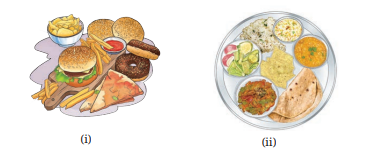
Answer:
Answer: The food group containing nutritious food (vegetables, fruits, milk, pulses, whole grains) is a better option for adolescents.
Why:
- Nutritious food provides essential nutrients like proteins, carbohydrates, fats, vitamins, and minerals required for proper growth and development.
- Adolescence is a period of rapid growth: The body needs extra nutrients to support height gain, bone development, and muscle growth.
- Helps build strong bones: Calcium and vitamin D from milk and green vegetables are essential.
- Provides energy: Carbohydrates from whole grains and cereals provide energy for daily activities.
- Supports immune system: Vitamins and minerals help fight infections and maintain good health.
- Junk food (pizza, burgers, cold drinks) is high in fats, sugar, and salt but low in essential nutrients. It can lead to obesity, tiredness, and health problems.
Conclusion: Adolescents should eat a balanced diet with nutritious food to support their growth and development.
Q3. Unscramble the underlined word in the following sentences: (i) The discharge of blood in adolescent girls which generally occurs every 28-30 days is nstmnoiaretu. (ii) The hoarseness in the voice of adolescent boys is due to enlarged iceov xob. (iii) Secondary sexual characteristics are natural signs that the body is preparing for adulthood and mark the onset of utypeb. (iv) We should say NO to laholco and srugd as they are addictive.
Answer:
Answers:
(i) The discharge of blood in adolescent girls which generally occurs every 28-30 days is menstruation.
(ii) The hoarseness in the voice of adolescent boys is due to enlarged voice box.
(iii) Secondary sexual characteristics are natural signs that the body is preparing for adulthood and mark the onset of puberty.
(iv) We should say NO to alcohol and drugs as they are addictive.
Q4. Shalu told her friend, "Adolescence brings only physical changes, like growing taller or developing body hair." Is she correct? What would you change in this description of adolescence?
Answer:
Answer: No, Shalu is not correct.
Adolescence involves more than just physical changes:
- Physical changes: Increase in height, weight gain, voice change, growth of body hair, development of secondary sexual characteristics, pimples/acne.
- Emotional changes: Mood swings, increased sensitivity, strong emotions, self-exploration.
- Behavioural changes: Desire for independence, peer influence, trying new things, questioning authority.
- Cognitive changes: Improved reasoning and thinking ability, increased curiosity, better decision-making skills.
- Social changes: Building relationships, understanding social norms, developing a sense of identity.
- Biological changes: Menstruation in girls, production of hormones, development of reproductive capability.
Corrected description: "Adolescence brings physical, emotional, behavioural, and social changes, including growing taller, developing body hair, experiencing mood swings, and becoming more independent."
Q5. During a discussion in the class, some of the students raised the following points. What questions would you ask them to check the correctness of these points? (i) Adolescents do not need to worry about behavioural changes. (ii) If someone tries a harmful substance once, they can stop anytime they want.
Answer:
(i) "Adolescents do not need to worry about behavioural changes."
Questions to check correctness:
- What kind of behavioural changes do adolescents typically experience?
- Can behavioural changes affect relationships with family and friends?
- How can adolescents handle mood swings and peer pressure in a positive way?
- Is it important to seek guidance when facing emotional challenges?
Correct understanding: Adolescents should be aware of behavioural changes and seek help if needed. Ignoring them may lead to stress, poor decisions, or conflict.
(ii) "If someone tries a harmful substance once, they can stop anytime they want."
Questions to check correctness:
- What is addiction and how does it develop?
- Why do people find it difficult to stop once they start using harmful substances?
- What are the health effects of substances like tobacco, alcohol, and drugs?
- How can one avoid peer pressure to try such substances?
Correct understanding: Harmful substances are addictive. The best way to avoid addiction is to say NO the first time and every time. Once started, it becomes difficult to stop.
Q6. Adolescents sometimes experience mood swings. On some days, they feel very energetic and happy, while on other days, they may feel low. What other behavioural changes are associated with this age?
Answer:
Answer: Other behavioural changes associated with adolescence include:
- Increased independence: Desire to make own decisions and be independent.
- Peer influence: Wanting to fit in with friends; adopting friends' behaviour and attitudes.
- Curiosity and exploration: Trying new things, exploring new interests and hobbies.
- Intense emotions: Strong feelings of anger, excitement, love, or sadness.
- Risk-taking behaviour: Taking risks to prove oneself or seek excitement.
- Questioning authority: Challenging rules and authority figures (parents, teachers).
- Increased sensitivity: Feeling hurt more easily; concern about how others perceive them.
- Interest in relationships: Developing romantic interests; forming deeper friendships.
- Self-discovery: Exploring identity, beliefs, values, and future goals.
- Social media involvement: Spending more time on online platforms; influenced by social media trends.
- Improved reasoning: Better analytical skills and ability to think critically.
Key point: These behavioural changes are a normal part of growing up. With awareness and guidance, adolescents can navigate these changes positively.
Q7. While using a toilet, Mohini noticed that used sanitary pads were scattered near the bin. She got upset and shared her feelings with her friends. They discussed the importance of proper disposal of sanitary pads. What suggestions can you give for proper disposal of sanitary pads and maintaining menstrual hygiene?
Answer:
Answer: Here are some suggestions for proper disposal of sanitary pads and maintaining menstrual hygiene:
Proper disposal of sanitary pads:
- Wrap properly: Used sanitary pads should be wrapped in newspaper or toilet paper before disposal.
- Dispose in dustbin: Place wrapped pads in a closed dustbin meant for sanitary waste.
- Do not flush: Never flush sanitary pads down the toilet as they can block drains.
- Use biodegradable pads: Use eco-friendly, biodegradable sanitary pads that are better for the environment.
- Community bins: If available, use separate bins for sanitary waste in schools and public places.
- Incineration: In some places, sanitary pads are incinerated (burned) safely at designated facilities.
Maintaining menstrual hygiene:
- Change pads regularly: Change sanitary pads every 4-6 hours to prevent infections.
- Wash hands: Always wash hands with soap and water before and after changing pads.
- Clean the area: Maintain personal hygiene by washing the external genital area regularly.
- Use clean, dry clothes: Wear clean, comfortable, and breathable cotton underwear.
- Use safe products: Choose sanitary pads, tampons, or menstrual cups that are safe and comfortable.
- Seek medical help: If there is any unusual pain, odour, or discomfort, consult a doctor.
Social responsibility:
- Create awareness among peers about menstrual hygiene.
- Remove stigma around menstruation by having open discussions.
- Ensure that proper facilities (separate toilets, disposal bins) are available in schools.
- Support government initiatives that provide free/low-cost sanitary pads to girls.
Q8. Mary and Manoj were classmates and good friends. On turning 11, Mary developed a little bulge on the front of her neck. She visited the doctor who gave her medication and asked to take iodine-rich diet. Similarly, a bump was developed on the front of Manoj's neck when he turned 12. However, the doctor told him that it was a part of growing up. According to you, what could be the possible reason for advising Mary and Manoj differently?
Answer:
Answer: Mary and Manoj were advised differently because the swellings on their necks were due to different reasons.
Mary's condition:
- Mary developed a bulge on the front of her neck, and the doctor advised her to take an iodine-rich diet and gave medication.
- This indicates that Mary had a swollen thyroid gland (goitre) due to iodine deficiency.
- The thyroid gland, located in the neck, needs iodine to produce thyroid hormones.
- Iodine deficiency leads to enlargement of the thyroid gland, which appears as a bulge in the neck.
- This is a health condition that needs medical treatment and dietary changes.
Manoj's condition:
- Manoj developed a bump on the front of his neck when he turned 12.
- The doctor told him it was a part of growing up.
- This bump is the Adam's apple, which becomes prominent in boys during adolescence.
- It is caused by the growth of the voice box (larynx) during puberty.
- This is a normal secondary sexual characteristic in boys and not a health condition.
Conclusion: Mary had a medical condition (goitre due to iodine deficiency), while Manoj had a normal developmental change (Adam's apple). This explains the different advice given by the doctor.
Q9. During adolescence, the boys and girls undergo certain physical changes, a few of which are given below. (i) Change in voice (ii) Development of breasts (iii) Growth of moustache (iv) Growth of facial hair (v) Pimples on the face (vi) Growth of hair in the pubic region (vii) Growth of hair in armpits Categorise these changes in the table given below:
| Observed only in boys | Observed only in girls | Common in boys and girls |
|---|---|---|
Answer:
Categorised changes:
| Observed only in boys | Observed only in girls | Common in boys and girls |
|---|---|---|
| • Growth of moustache • Growth of facial hair | • Development of breasts | • Change in voice (more prominent in boys) • Pimples on the face • Growth of hair in the pubic region • Growth of hair in armpits |
Explanation:
- Growth of moustache and facial hair: Observed in boys due to increased testosterone during puberty.
- Development of breasts: Observed in girls due to increased oestrogen during puberty.
- Change in voice: Happens in both, but is more prominent in boys (voice becomes deeper).
- Pimples on face: Occurs in both due to increased oily secretions and hormonal changes.
- Growth of hair in pubic region and armpits: Occurs in both boys and girls during puberty.
Q10. Prepare a poster mentioning the tips for adolescents to live a healthy lifestyle.
Answer:
Poster: Healthy Lifestyle Tips for Adolescents
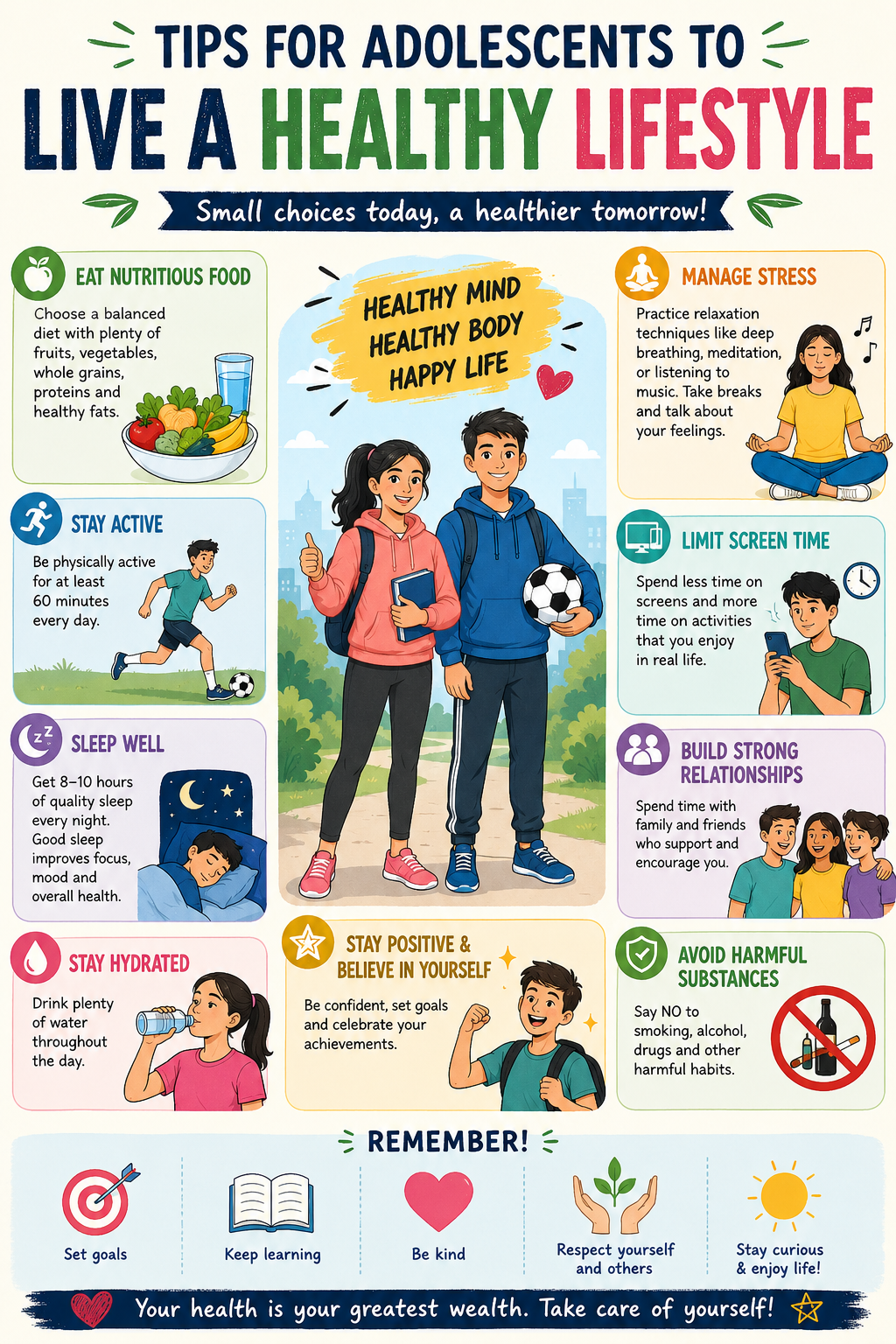
Tips for a Healthy Lifestyle During Adolescence:
- Eat a balanced diet: Include fruits, vegetables, whole grains, pulses, milk, and nuts. Eat regular meals. Avoid junk food and sugary drinks.
- Drink plenty of water: Stay hydrated. Drink at least 8 glasses of water daily.
- Exercise regularly: Play sports, walk, run, cycle, swim, or practice yoga. Exercise for at least 30-45 minutes daily.
- Maintain personal hygiene: Bathe daily. Keep skin, hair, and nails clean. Wash hands before and after meals.
- Maintain menstrual hygiene: Use clean sanitary pads. Change regularly. Dispose properly. Wash hands with soap.
- Get adequate sleep: Sleep for 8-10 hours daily. Avoid late nights and screen time before bed.
- Manage emotions: Talk to family and friends when upset. Practise mindfulness and relaxation techniques. Express feelings through art, writing, or music.
- Say NO to harmful substances: Avoid tobacco, cigarettes, alcohol, and drugs. They are addictive and harmful to health.
- Be kind and respectful: Treat others with kindness and respect. Build positive relationships.
- Be safe online: Do not share personal information with strangers. Be cautious on social media. Report any bullying.
- Seek guidance: Talk to parents, teachers, or trusted adults when confused or stressed.
- Stay positive: Accept changes as normal. Focus on your strengths and goals.
Remember: Your health and your future are in your hands — choose wisely!
Exploratory Projects
Q1. Find out about some personalities and organisations working in your locality to improve mental health of youth. Interview them. List at least five questions that you will ask in the interviews.
Answer:
Project Activity: Interviewing Mental Health Personalities/Organisations
Aim: To learn about the work being done to improve the mental health of youth in the locality.
Questions to ask in the interview:
- What are the most common mental health issues you see among young people in this area?
- What are the main causes of stress, anxiety, and depression among adolescents today?
- What are some early warning signs that a young person may be struggling with mental health?
- What steps can adolescents take to manage their mental health and cope with stress?
- What support services or resources are available for young people in this community?
- How can families, schools, and the community support adolescent mental health?
- What advice would you give to a young person who is feeling overwhelmed or depressed?
- What role does physical activity, nutrition, and sleep play in mental health?
- How can we reduce the stigma around mental health issues?
- What government or NGO programmes are available to help youth with mental health?
Personalities/Organisations to explore:
- School counsellors and psychologists
- NGOs working for youth welfare
- Health clinics and community health centres
- Mental health helplines (e.g., 14446 for addiction)
- Youth clubs and organisations
- Government health workers
Q2. Perform a role play on the theme 'Child marriage: A social evil', highlighting how it negatively impacts the overall well-being of children, particularly the health of young girls.
Answer:
Project Activity: Role Play on Child Marriage
Aim: To raise awareness about the negative impact of child marriage on children, especially girls.
Key points to highlight in the role play:
- Child marriage is a violation of children's rights.
- It robs children of their childhood, education, and dreams.
- It has severe health impacts on young girls:
- Early pregnancy and childbirth complications
- Higher risk of maternal and infant mortality
- Malnutrition and anaemia
- Psychological trauma and mental health issues
- Lack of access to healthcare
- It leads to:
- Dropout from school and loss of education
- Economic dependency and poverty
- Social isolation
- Increased risk of domestic violence
- It violates the law — the Prohibition of Child Marriage Act, 2006.
Characters for role play (suggested):
- Young girl (the victim of child marriage)
- Parents (pressuring for child marriage)
- Teacher/Activist (against child marriage)
- Health worker (explaining health risks)
- Government official (explaining laws and schemes)
- Narrator (providing context and statistics)
Message to convey:
- Education is the right of every child.
- Child marriage is a social evil that must end.
- Every girl deserves to grow, learn, and choose her own future.
Q3. 21 June is celebrated as International Yoga Day. Organise a small camp with the help of your teachers and practise some asanas.
Answer:
Project Activity: Yoga Camp for Adolescents
Aim: To celebrate International Yoga Day (21 June) by organising a yoga camp and learning about the benefits of yoga for adolescents.
Benefits of yoga for adolescents:
- Improves flexibility and strength
- Reduces stress, anxiety, and depression
- Improves concentration and focus
- Enhances emotional well-being
- Helps in maintaining healthy weight
- Improves sleep quality
- Boosts immune system
Recommended asanas (yoga postures) for adolescents:
- Tadasana (Mountain Pose): Improves posture and height.
- Bhujangasana (Cobra Pose): Strengthens back muscles.
- Vrikshasana (Tree Pose): Improves balance and concentration.
- Virabhadrasana (Warrior Pose): Builds strength and stamina.
- Trikonasana (Triangle Pose): Improves flexibility.
- Pranayama (Breathing Exercises): Reduces stress and improves lung capacity.
- Shavasana (Corpse Pose): Helps in relaxation and mental peace.
How to organise the yoga camp:
- Choose a clean, open space (school ground or hall).
- Arrange for yoga mats or carpets.
- Invite a yoga instructor or a trained teacher.
- Wear comfortable, loose clothing.
- Start with light warm-up exercises.
- Practise asanas under proper guidance.
- End with relaxation and breathing exercises.
- Discuss the importance of regular yoga practice.
Science and Society
Q1. Adolescents, especially girls, may sometimes suffer from blood-related health problem(s) because of a deficiency of iron or vitamin B₁₂ in the body.
Answer:
Answer: The blood-related health problem caused by deficiency of iron or vitamin B₁₂ is anaemia.
Anaemia: A condition where the blood lacks enough healthy red blood cells to carry adequate oxygen to the body's tissues.
Causes of anaemia in adolescents:
- Iron deficiency (most common)
- Vitamin B₁₂ deficiency
- Folic acid deficiency
- Heavy menstrual bleeding (in girls)
- Poor dietary intake of iron-rich foods
- Increased iron requirements during growth spurt
Symptoms of anaemia:
- Fatigue and weakness
- Pale skin and pale inner eyelids
- Dizziness and headaches
- Shortness of breath
- Cold hands and feet
- Difficulty in concentrating
- Irritability
Management and prevention:
- Include iron-rich foods: Green leafy vegetables (spinach), legumes (beans, lentils), dried fruits (raisins, figs), jaggery, whole grains.
- Include vitamin B₁₂ rich foods: Milk, eggs, curd, paneer, fortified cereals.
- Include vitamin C: Citrus fruits (orange, lemon, amla) to enhance iron absorption.
- Iron supplements: If prescribed by a doctor.
- Regular health check-ups: To monitor haemoglobin levels.
Government schemes for prevention:
- Weekly Iron and Folic Acid Supplementation (WIFS): For adolescent girls and boys.
- Anaemia Mukt Bharat Programme: National programme to reduce anaemia.
- PM POSHAN (Mid-Day Meal): Provides nutritious meals to school children.
Q2. To support menstrual hygiene, the government has introduced several initiatives — Menstrual Hygiene Scheme (MHS), Rashtriya Kishor Swasthya Karyakram (RKSK), Suvidha Sanitary Napkin Initiative, and various state-level initiatives like 'Shuchi Scheme' in Karnataka and free sanitary napkin schemes in Tamil Nadu and Odisha.
Answer:
Answer: These government initiatives aim to improve menstrual hygiene and reproductive health among women and adolescent girls.
Summary of initiatives:
| Initiative | Key Features |
|---|---|
| Menstrual Hygiene Scheme (MHS) | Free/reduced price sanitary pads to rural adolescent girls; awareness programmes |
| Rashtriya Kishor Swasthya Karyakram (RKSK) | Overall health of adolescents; includes menstrual health and hygiene; peer education |
| Suvidha Sanitary Napkin Initiative | Biodegradable sanitary pads at affordable prices through Jan Aushadhi Kendras |
| Shuchi Scheme (Karnataka) | State-level scheme for menstrual hygiene |
| Free Sanitary Napkin Schemes | Tamil Nadu, Odisha — free pads in government schools |
Why these initiatives are important:
- Improve menstrual hygiene and reduce infections.
- Increase school attendance of adolescent girls.
- Reduce stigma around menstruation.
- Promote awareness about reproductive health.
- Empower women and girls through better health.
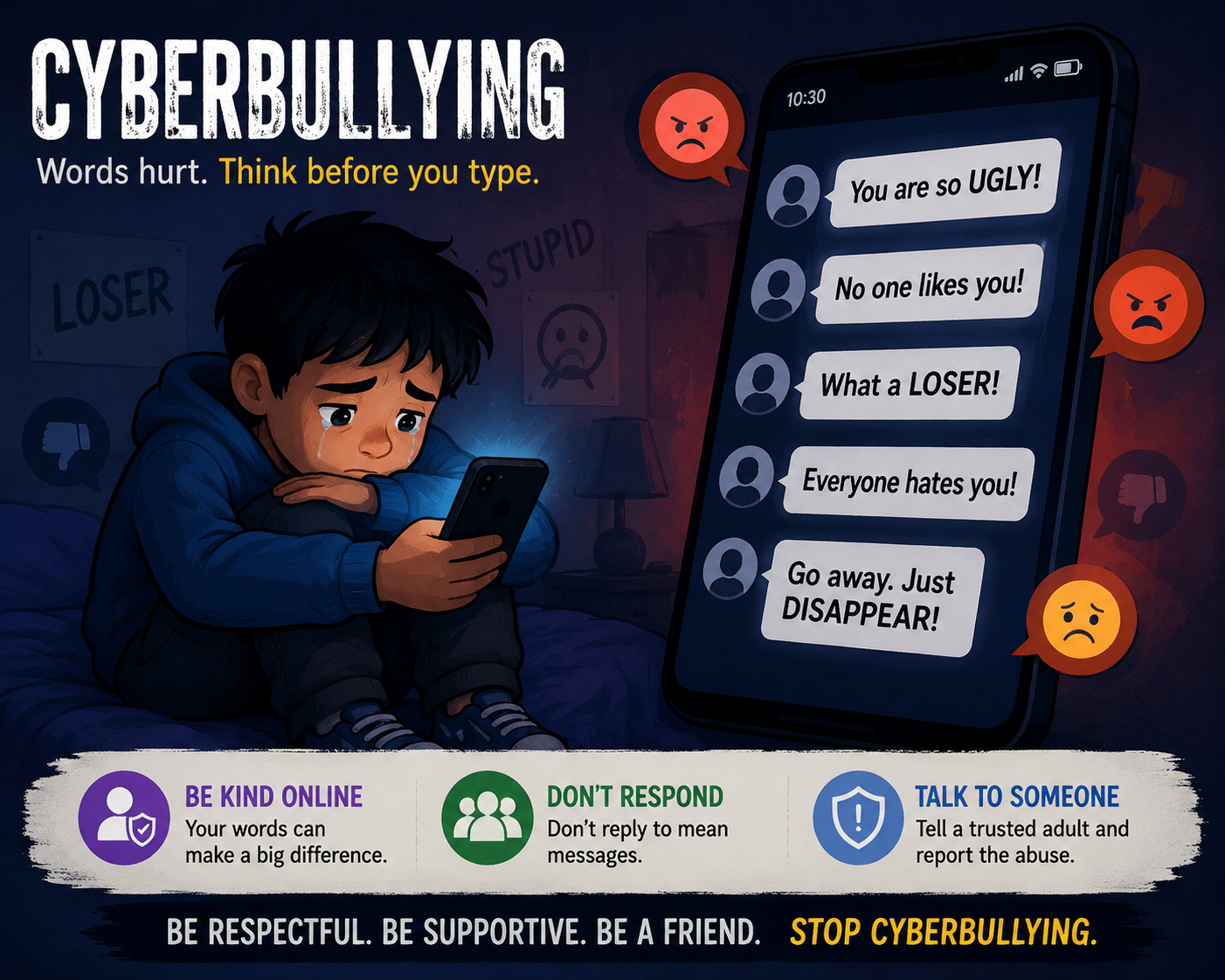
Q3. Cyberbullying involves the use of digital devices such as phones, computers, or online platforms to harass others by sending misleading messages, spreading false rumours, or sharing personal information without consent. However, if someone tries to bully you, it is important not to feel scared or helpless. Rather, handle it wisely and seek help from parents and teachers.
Answer:
Answer: Cyberbullying is a serious issue that affects many young people today.
What is cyberbullying?
- Use of digital devices to harass, threaten, or embarrass someone.
- Can include sending hurtful messages, spreading rumours, sharing private information, or posting embarrassing photos/videos.
How to handle cyberbullying:
- Do not respond: Do not reply to hurtful messages.
- Save evidence: Take screenshots of messages or posts.
- Block the bully: Block the person on social media platforms.
- Report: Report the bullying to the platform or authorities.
- Seek help: Talk to parents, teachers, or trusted adults.
- Don't feel alone: Reach out to friends and family for support.
Prevention tips:
- Protect your privacy — do not share personal information online.
- Be cautious about what you post — once online, it is hard to delete.
- Think before you send — avoid sending anything you would not want others to see.
- Be kind — treat others online as you would in person.
- Report inappropriate content or behaviour.
- Use privacy settings to control who can see your posts.
Remember: You are not alone. Always seek help from trusted adults if you experience cyberbullying.
Q4. The Nasha Mukt Bharat Abhiyaan was launched by the Ministry of Social Justice and Empowerment, Government of India. It intends to reach out to the masses and spread awareness on the issue of avoiding substance abuse through active participation of the youth, women, and the community. The special focus is on the prevention of substance abuse among early-age children. The Government has launched a National De-addiction Helpline — 14446, to deal with drug addiction and to help drug addicts.
Answer:
Answer: The Nasha Mukt Bharat Abhiyaan is a significant initiative to combat substance abuse in India.
Key features of Nasha Mukt Bharat Abhiyaan:
- Launched by Ministry of Social Justice and Empowerment, Government of India.
- Focuses on spreading awareness about the harmful effects of substance abuse.
- Active participation of youth, women, and community members.
- Special focus on prevention of substance abuse among early-age children.
National De-addiction Helpline — 14446:
- 24/7 helpline for drug addiction support.
- Provides counselling and guidance.
- Helps drug addicts seek treatment and rehabilitation.
- Connects callers with de-addiction centres.
Why such initiatives are important:
- Substance abuse is a serious problem affecting physical and mental health.
- It leads to addiction, which is difficult to overcome.
- It causes financial, social, and family problems.
- Youth are especially vulnerable to peer pressure and curiosity.
- Early intervention and awareness can prevent addiction.
How to help yourself and others:
- Say NO to harmful substances — the first time and every time.
- Stay away from peer pressure.
- Seek support from family and teachers if someone is pressuring you.
- Report instances of substance abuse among peers.
- Be aware of helplines and support services available.