
Probe and Ponder
Q1. How does your body respond to an infection such as common cold?
Answer:
When your body is infected with a virus like the common cold, your immune system responds by:
- Releasing chemicals that cause inflammation, leading to symptoms like a runny nose, sore throat, and congestion.
- Raising your body temperature (fever) to help fight the infection.
- Producing white blood cells and antibodies to attack and destroy the virus.
- You may also feel tired or have body aches as your body uses energy to fight the infection.
Q2. We rarely see cases of smallpox or polio these days, but diseases like diabetes and heart problems are more common. Why?
Answer:
Smallpox and polio are caused by viruses and have been largely eradicated or controlled through effective vaccination programs. However, diabetes and heart problems (non-communicable diseases) are becoming more common due to:
- Lifestyle changes: Increased consumption of processed and junk food, lack of physical activity, and sedentary habits.
- Rising rates of obesity and stress.
- Longer life expectancy, as these diseases are more common in older age.
- Environmental factors like pollution.
Q3. Could climate change lead to new types of diseases?
Answer:
Yes, climate change could lead to new or increased diseases by:
- Altering the habitats and distribution of disease-carrying vectors (like mosquitoes), leading to the spread of diseases like malaria and dengue to new areas.
- Creating conditions that favor the growth of pathogens and fungi.
- Causing extreme weather events (floods, droughts) that can contaminate water supplies and lead to waterborne diseases.
- Affecting agricultural production and nutrition, potentially leading to deficiency diseases.
Q4. How do emotions like stress or worry affect us and make us sick?
Answer:
Emotions like stress and worry can affect our health by:
- Weakening the immune system, making us more susceptible to infections.
- Causing physical symptoms like headaches, stomachaches, and sleep disturbances.
- Leading to unhealthy behaviors like overeating, smoking, or alcohol consumption.
- Contributing to mental health issues like anxiety and depression.
- Worsening chronic diseases like heart disease and diabetes.
Q5. Why do some groups of people get affected more than others during disease outbreaks?
Answer:
Some groups of people are more affected during disease outbreaks due to:
- Economic factors: Lack of access to healthcare, poor nutrition, and crowded living conditions.
- Social factors: Limited access to clean water, sanitation, and health education.
- Pre-existing health conditions: Weaker immune systems or chronic diseases.
- Occupational exposure: Jobs that put people in contact with infected individuals or environments.
- Age: Young children and the elderly are often more vulnerable.
Activity 3.1
Q1. A Grade 8 student moved to a new school in another city. With no friends in his new environment and busy parents, he felt lonely. To cope, he spent more time on his phone and social media, but this made him feel worse. He stopped trying to make friends, had headaches, lost weight, and could not sleep well. A doctor advised less screen time and meeting a counsellor. The school counsellor arranged help to support him in making friends and improving his health. Think and Reflect: What was the cause of the boy's health problems? How did his habits and surroundings affect his well-being?
Answer:
The boy's health problems were caused by a combination of factors:
- Mental health issues: Loneliness, stress, and difficulty adjusting to a new environment.
- Poor habits: Excessive screen time and social media use, which worsened his feelings of isolation.
- Physical symptoms: Headaches, weight loss, and sleep disturbances were physical manifestations of his emotional distress.
- Lack of social connections: The absence of friends and family support contributed to his poor mental health.
His habits (excessive screen time) and surroundings (new city, no friends, busy parents) directly affected his well-being, showing that health includes physical, mental, and social aspects.
Activity 3.2
Q1. List some good habits that your parents, teachers, or elders often encourage you to follow. How many of these are already a part of your daily routine? Which ones would you like to start following? Add to the list below: Keep yourself clean by maintaining personal hygiene. Eat a healthy and balanced diet. Exercise regularly. Make time to relax or meditate every day. Now, think about habits that are not good for your health. Add more to the list below: Spending too much time on mobile phones or other digital screens. Eating fast food and other junk food every day. Sleeping very late or not getting enough sleep. Skipping meals, especially breakfast.
Answer:
This is a personal reflection activity. Students should list good habits they follow (e.g., brushing teeth twice a day, drinking enough water, studying regularly) and bad habits they want to reduce or avoid (e.g., eating too much sugar, lying in bed after waking up, procrastinating).
Activity 3.3
Q1. Look at Fig. 3.3a and Fig. 3.3b. Which playground would you like to play in, and why?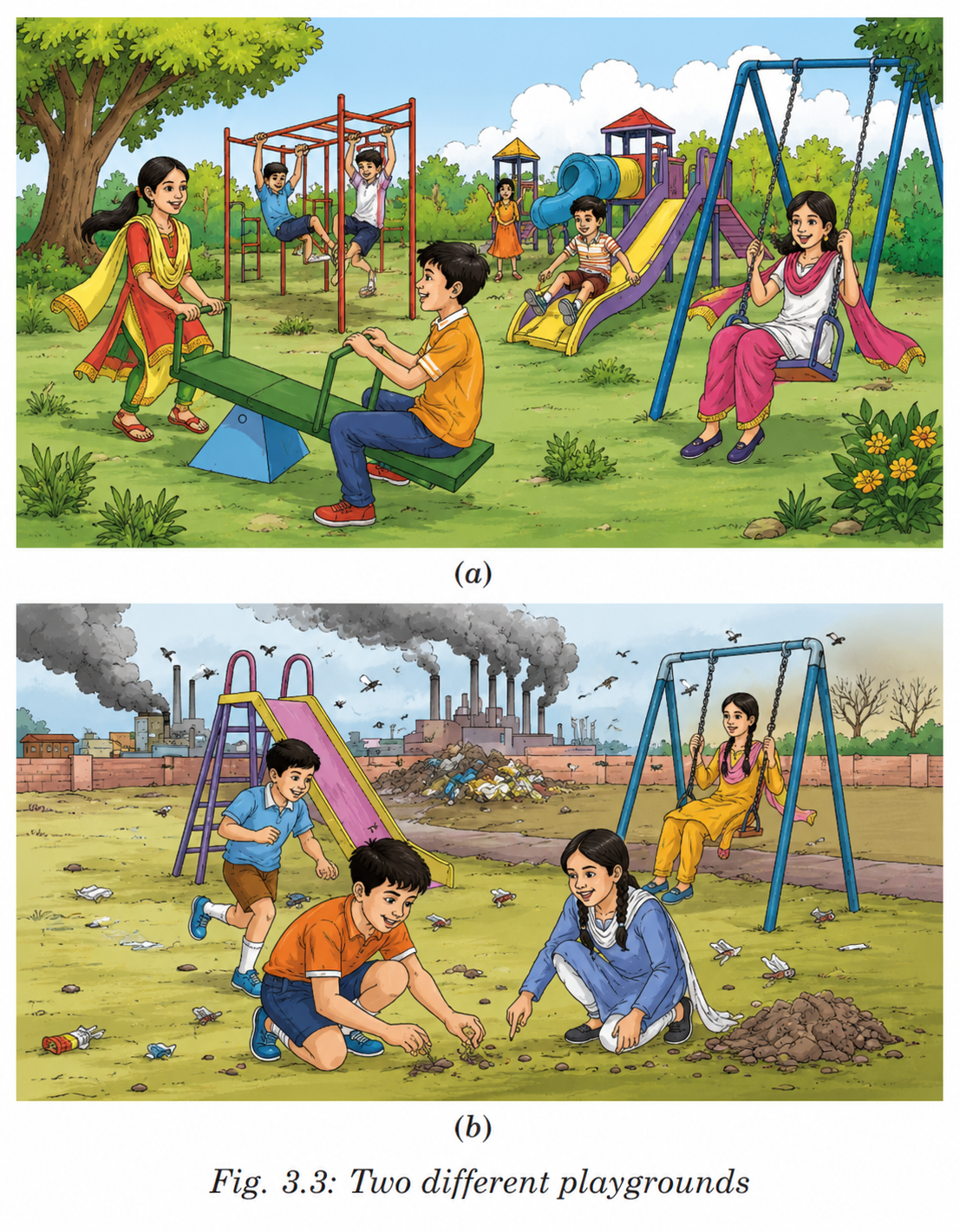
Answer:
Most students would prefer to play in the clean, well-maintained playground (Fig. 3.3a) because it is safe, hygienic, and visually appealing. The other playground (Fig. 3.3b) is dirty, polluted, and unhygienic, which could lead to health problems like infections and diseases.
Activity 3.4
Q1. Grade 8 students listed some common communicable diseases in Table 3.1 during a community campaign and a library search. Check the information listed by referring to books, trusted websites, or asking your science teacher. Add any missing details. Study the table and think about what simple steps can help prevent each disease.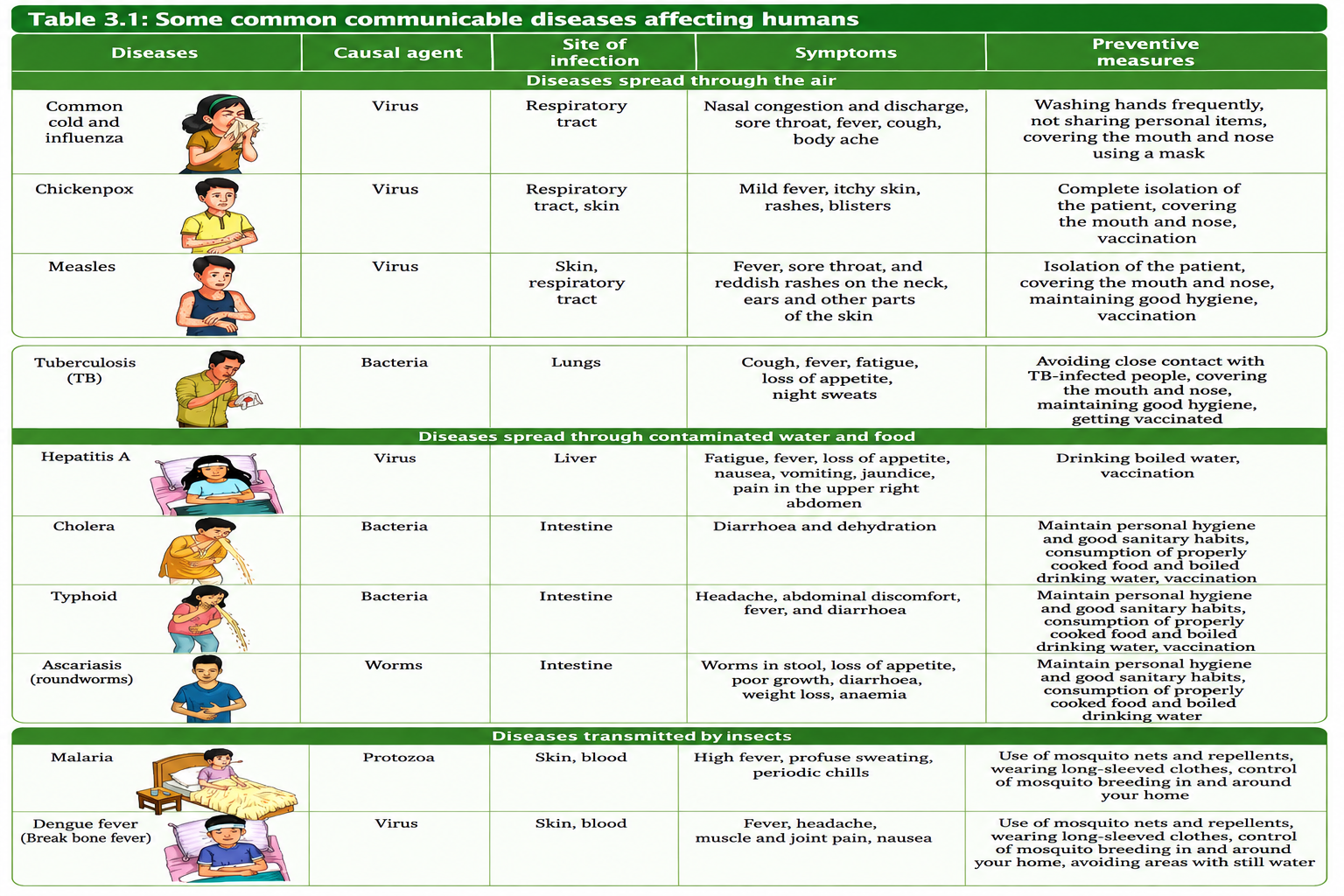
Answer:
This is a research and discussion activity. Students should verify the information in the table and add missing details. For example, for Tuberculosis (TB), they can add: Causal agent - Bacteria; Site of infection - Lungs; Symptoms - Persistent cough, fever, weight loss, night sweats; Preventive measures - BCG vaccine, covering mouth while coughing, good ventilation. For Typhoid: Causal agent - Bacteria; Site of infection - Digestive system; Symptoms - High fever, headache, abdominal pain; Preventive measures - Drinking safe water, good hygiene, vaccination.
Activity 3.5
Q1. Find out the three most common lifestyle-related diseases in your neighbourhood. Talk to a doctor, nurse, health worker or even a family member who knows about health and what kind of lifestyle changes can help prevent or manage these diseases. You can also consult trusted health websites, books, teachers and doctors. Fill in Table 3.2 and learn more about lifestyle-related diseases. 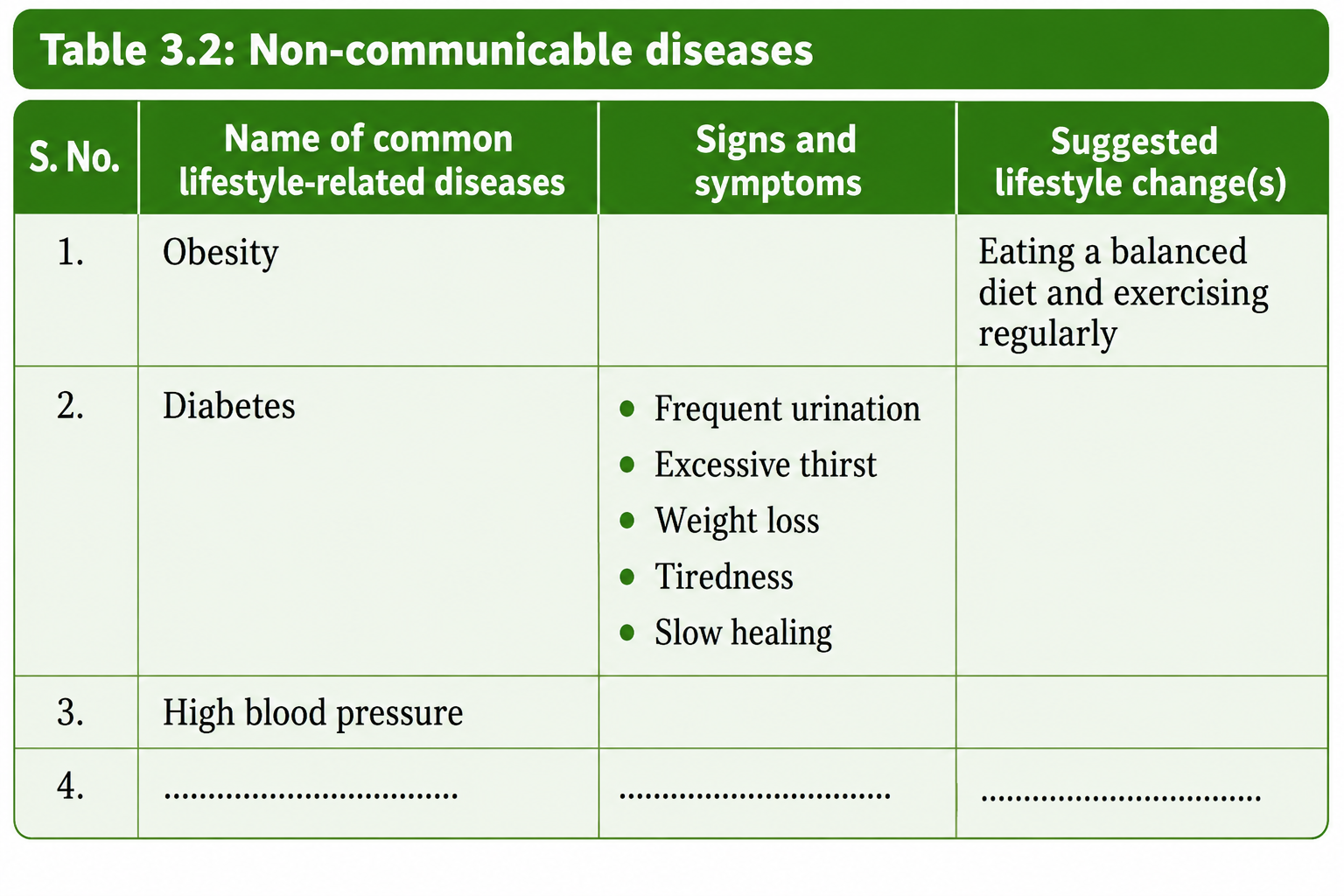
Answer:
This is a survey and research activity. Common lifestyle-related diseases include:
- Obesity: Signs: Weight gain, difficulty in physical activities. Lifestyle changes: Balanced diet, regular exercise, avoiding junk food.
- Diabetes: Signs: Frequent urination, excessive thirst, tiredness, slow healing. Lifestyle changes: Healthy diet, regular exercise, maintaining healthy weight.
- High Blood Pressure: Signs: Often no symptoms, but may cause headaches, dizziness. Lifestyle changes: Reducing salt intake, regular exercise, stress management, avoiding alcohol.
Activity 3.6
Q1. In Bhadrak district, Odisha, a community sanitation campaign helped more people build and use toilets. This reduced open defecation significantly, and improved child health, with fewer cases of diarrhoea and infections. What do you infer from this case study? Simple steps like good sanitation can greatly reduce the spread of communicable diseases. Find about such community campaigns held in your location. Share in your class and discuss with your peers about the impact of such initiatives.
Answer:
The case study shows that community participation and awareness about sanitation can lead to significant health improvements. Simple measures like building and using toilets help prevent diseases like diarrhoea and other infections, especially in children. Students can research similar campaigns in their area (e.g., Swachh Bharat Abhiyan) and discuss their impact.
Activity 3.7
Q1. Study the infographic given in Fig. 3.5b. How do you think the antibiotic resistance has been developed in bacterial pathogens? What precautions may be taken to reduce antibiotic resistance?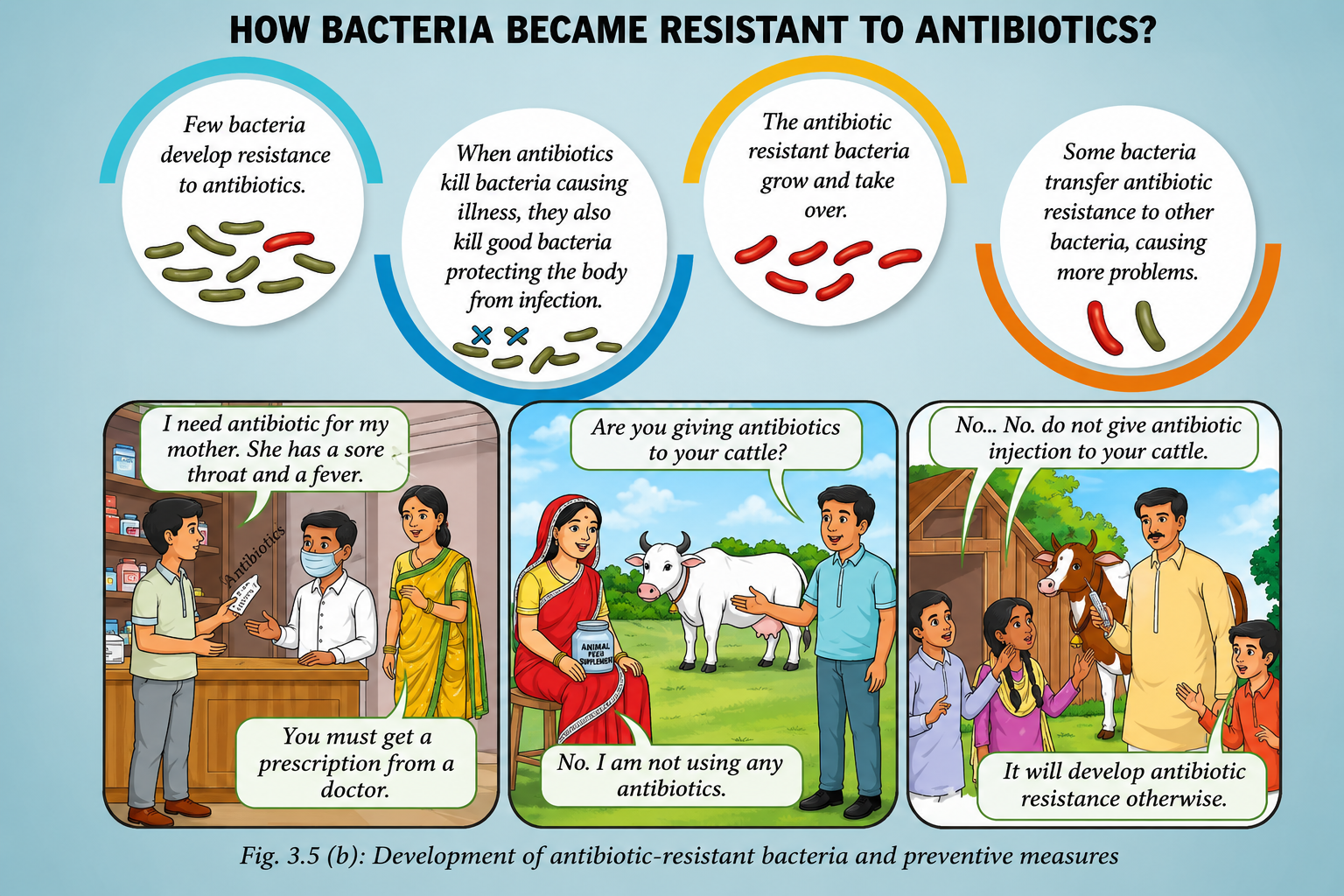
Answer:
Antibiotic resistance develops when bacteria mutate and become resistant to the effects of antibiotics. Overuse and misuse of antibiotics (e.g., taking antibiotics for viral infections, not completing the full course, or using antibiotics without a prescription) speed up this process. Resistant bacteria survive and multiply, spreading resistance to others.
Precautions to reduce antibiotic resistance:
- Take antibiotics only when prescribed by a doctor.
- Complete the full course of antibiotics, even if you feel better.
- Do not self-medicate or share antibiotics with others.
- Avoid using antibiotics for viral infections like colds or flu.
- Practice good hygiene to prevent infections in the first place.
Keep the Curiosity Alive
Q1. Group the diseases shown in the images as communicable or non-communicable.
Answer:
This is an observation activity. Students should classify diseases based on their knowledge. For example, Communicable: Common cold, Tuberculosis, Dengue, COVID-19, Chickenpox, Malaria, Typhoid. Non-communicable: Diabetes, Heart Disease, Cancer, Obesity, Asthma, High Blood Pressure.
Q2. Diseases can be broadly grouped into communicable and non-communicable diseases. From the options given below, identify the non-communicable diseases. (i) Typhoid (ii) Asthma (iii) Diabetes (iv) Measles (a) (i) and (ii) (b) (ii) and (iii) (c) (i) and (iv) (d) (ii) and (iv)
Answer:
Answer: (b) (ii) and (iii)
Typhoid and Measles are communicable diseases (caused by pathogens). Asthma and Diabetes are non-communicable diseases (not caused by pathogens).
Q3. There is a flu outbreak in your school. Several classmates are absent, while some are still coming to school coughing and sneezing. (i) What immediate actions should the school take to prevent further spread? (ii) If your classmate, who shares the bench with you, starts showing symptoms of the flu, how can you respond in a considerate way without being rude or hurtful? (iii) How can you protect yourself and others from getting infected in this situation?
Answer:
(i) Immediate actions by the school:
- Advise sick students to stay home and rest.
- Encourage students and staff to wear masks.
- Provide hand sanitizers and ensure proper handwashing facilities.
- Disinfect common surfaces (desks, doorknobs).
- Create awareness about cough etiquette (covering mouth and nose).
(ii) Responding to a classmate: Politely suggest that they visit the school nurse or health room. Offer to share notes or assignments so they can rest without worrying about falling behind. Be kind and understanding, as they may feel unwell.
(iii) Protecting yourself and others:
- Wash hands frequently with soap and water.
- Wear a mask in crowded places.
- Avoid touching your face (eyes, nose, mouth).
- Maintain distance from people who are coughing or sneezing.
- Stay home if you feel unwell.
Q4. Your family is planning to travel to another city where malaria is prevalent. (i) What precautions should you take before, during, and after the trip? (ii) How can you explain the importance of mosquito nets or repellents to your sibling? (iii) What could happen if travellers ignore health advisories in such areas?
Answer:
(i) Precautions:
- Before: Consult a doctor for antimalarial medication, pack mosquito repellents, wear long-sleeved clothes.
- During: Use mosquito nets at night, apply repellent on exposed skin, avoid areas with stagnant water.
- After: Monitor for symptoms like fever, headache, and body aches; consult a doctor if symptoms appear.
(ii) Explaining to sibling: "Mosquitoes that carry malaria are most active at night. Using a net while sleeping and applying repellent on our skin prevents mosquito bites, so we stay safe from getting sick."
(iii) Consequences of ignoring health advisories: Travellers may contract malaria, leading to severe fever, chills, and complications that could require hospitalization. It could also lead to the spread of the disease to their home area.
Q5. Your uncle has started smoking just to fit in with his friends, even though it is well known that smoking can seriously harm health and even cause death. (i) What would you say to him to make him stop, without being rude? (ii) What would you do if your friend offers you a cigarette at a party? (iii) How can schools help prevent students from indulging in such harmful habits?
Answer:
(i) Talking to your uncle: "Uncle, I care about you, and I've read that smoking can cause serious health problems like lung cancer and heart disease. There are better ways to fit in or relax, like sports or listening to music. I really want you to be healthy and stay with us for a long time."
(ii) If a friend offers a cigarette: Say, "No, thank you. I don't smoke, and I prefer to stay healthy." You can also add that it's harmful and suggest doing something else together.
(iii) How schools can help: Conduct awareness programs about the dangers of smoking and drugs, invite health experts for talks, involve students in peer education programs, and provide counseling services for students who need help.
Q6. Saniya claims to her friend Vinita that "Antibiotics can cure any infection, so we don't need to worry about diseases." What question(s) can Vinita ask her to help Saniya understand that her statement is incorrect?
Answer:
Vinita can ask:
- "Can antibiotics cure viral infections like the common cold or flu?"
- "Why do doctors say that we should not take antibiotics for a viral infection?"
- "What happens if we take antibiotics unnecessarily?"
- "Do antibiotics work against diseases caused by fungi or protozoa?"
These questions will help Saniya realize that antibiotics only work against bacterial infections, not viral or other types of infections, and their misuse can lead to antibiotic resistance.
Q7. The following table contains information about the number of dengue cases reported in a hospital over a period of one year:
| S. No. | Month | No. of dengue cases |
|---|---|---|
| 1 | January | 10 |
| 2 | February | 12 |
| 3 | March | 15 |
| 4 | April | 18 |
| 5 | May | 22 |
| 6 | June | 40 |
| 7 | July | 65 |
| 8 | August | 65 |
| 9 | September | 65 |
| 10 | October | 30 |
| 11 | November | 30 |
| 12 | December | 20 |
Answer:
Bar Graph: Students should draw a bar graph with months on the X-axis and the number of dengue cases on the Y-axis.
(i) Highest cases: July, August, September (65 cases each).
(ii) Lowest cases: January (10 cases).
(iii) Environmental factors: During the monsoon season (July-September), there is more rainfall, leading to water accumulation in stagnant pools, containers, and tires, which are breeding grounds for mosquitoes (Aedes aegypti) that spread dengue.
(iv) Preventive steps:
- Community campaigns to prevent water stagnation.
- Regular cleaning of containers and drains.
- Using larvicides in water bodies.
- Public awareness about mosquito nets and repellents.
- Medical preparedness and early reporting of cases.
Q8. Imagine you are in charge of a school health campaign. What key messages would you use to reduce communicable and non-communicable diseases?
Answer:
Key messages:
- For communicable diseases:
- Wash hands with soap and water regularly.
- Cover your mouth and nose while coughing or sneezing.
- Do not share personal items like towels and water bottles.
- Stay home if you are sick.
- Get vaccinated on time.
- Keep surroundings clean and free of mosquito breeding sites.
- For non-communicable diseases:
- Eat a balanced diet with fruits and vegetables.
- Exercise daily and stay active.
- Limit screen time and junk food.
- Manage stress through yoga, meditation, or hobbies.
- Avoid smoking, alcohol, and drugs.
- Regular health check-ups.
Q9. It is recommended that we should not take an antibiotic for a viral infection like a cold, a cough, or flu. Can you provide the possible reason for this recommendation?
Answer:
Antibiotics only work against bacterial infections because they target parts of bacterial cells that are different from human cells. Viruses are not cells and have different structures and replication mechanisms. Taking antibiotics for viral infections will not cure the illness, and it can lead to antibiotic resistance, making antibiotics less effective for future bacterial infections.
Q10. Which disease(s) among the following may spread if drinking water gets contaminated by the excreta from an infected person? Hepatitis A, Tuberculosis, Poliomyelitis, Cholera, Chickenpox.
Answer:
Hepatitis A, Poliomyelitis, and Cholera can spread through contaminated drinking water (feco-oral route). Tuberculosis spreads through the air (coughing/sneezing). Chickenpox spreads through air and direct contact.
Q11. When our body encounters a pathogen for the first time, the immune response is generally low but on exposure to the same pathogen again, the immune response by the body is much more compared to the first exposure. Why is it so?
Answer:
On the first exposure to a pathogen, the immune system takes time to recognize the pathogen and produce antibodies. This is called the primary immune response. On subsequent exposure to the same pathogen, the immune system has memory cells that recognize the pathogen quickly and produce a faster and stronger immune response, preventing severe illness. This is the basis of immunity and vaccination.
Discover, Design, and Debate
Q1. Students maintain a health diary for at least a month to track food, hygiene, exercise, sleep, screen time, and emotional state. Read about Indian scientists like Suniti Solomon, Asima Chatterjee, Yellapragada Subbarao, Mary Poonen Lukose for their contributions in the field of health and diseases. The deadly disease smallpox was eradicated by vaccination. Discover how this was done and why it worked. Debate whether everyone should be required to get vaccinated to protect others. According to current guidelines, learn the correct sequence of steps for performing cardiopulmonary resuscitation (CPR) on an adult in case of sudden stoppage of breathing. School may invite a doctor or a professional to demonstrate a mock drill. Invite a doctor to the school. Students may be encouraged to interact with the doctor on the issues of malnutrition, under-nutrition, and over-nutrition. If you are given an opportunity to create a health card, what all would you like to include in it. Create your own health card and have discussion about it. Have a debate on 'Are there ill-effects of fast food on companion animals?'
Answer:
This is a project-based activity. Students can:
- Maintain a health diary for a month.
- Research the contributions of Indian scientists mentioned.
- Study the eradication of smallpox and discuss vaccine debates.
- Learn CPR from a professional.
- Design a personal health card.
- Debate the effects of fast food on companion animals.