
Activity 2.1: Let us explore and record
Q2.1. Plan a nature walk, observe plants/animals, record features of stems, leaves, flowers (Table 2.1) and place, food, movement of animals (Table 2.2).
Answer:
- Hibiscus: Stem – Hard; Leaves – broad, alternate arrangement; Flowers – red, large, trumpet-shaped.
- Neem: Flowers – small, white, clustered.
- Frog: lives near ponds/land, eats insects, moves by hopping/swimming, has moist skin.
Activity 2.2: Let us appreciate
Q2.2. Close eyes, think of a plant/animal, draw it, discuss observations.
Answer:
Different students will draw different plants/animals (e.g., mango tree, sparrow, rose, butterfly) — this shows the class collectively represents a wide range of biodiversity, and many more varieties exist beyond what's drawn on the board.
Activity 2.3: Let us group
Q2.3. Collect pictures, group by common features, compare criteria used by different groups.
Answer:
Different groups may use different bases like height, stem type, eating habits, or habitat — showing there's no single 'correct' way to group; grouping depends on the feature chosen.
Activity 2.4: Let us group (Table 2.3 – height & nature of stem)
Q2.4. Group plants based on height and nature of stem (Table 2.3).
Answer:
| Plant | Height | Stem | Branches | Group |
|---|---|---|---|---|
| Hibiscus | Medium | Brown, Hard, Thin | Close to ground | Shrub |
| Grass | Short | Green, Tender, Thin | Close to ground | Herb |
| Neem | Tall | Brown, Hard, Thick | Higher up | Tree |
Activity 2.5: Let us compare (leaf venation)
Q2.5. Compare leaf venation in different plants.
Answer:
Hibiscus shows reticulate (net-like) venation; banana and grass show parallel venation — differences visible in vein pattern around the central/midrib vein.
Activity 2.6: Let us find out (roots)
Q2.6. Find out the root types of different plants.
Answer:
Mustard/hibiscus have taproots (one main root with side roots); grass has fibrous roots (a bunch of thin, similar-sized roots from the stem base). Other grasses (e.g., wheat, lemongrass) also show fibrous roots.
Activity 2.7: Let us relate and analyse (Table 2.4)
Q2.7. Relate venation and root type using additional examples.
Answer:
Sample additions to Table 2.4:
- Marigold: Reticulate venation, Taproot
- Sadabahar: Reticulate venation, Taproot
- Wheat: Parallel venation, Fibrous root
Conclusion: Reticulate venation generally goes with taproots; parallel venation generally goes with fibrous roots.
Activity 2.8: Let us compare (seeds)
Q2.8. Compare the seeds of chickpea and maize.
Answer:
Chickpea splits into two cotyledons (dicot); maize has one cotyledon (monocot). Dicots ? reticulate venation + taproot; Monocots ? parallel venation + fibrous root.
Activity 2.9: Let us find out (Table 2.5 – movement)
Q2.9. Observe and record the movement of different animals.
Answer:
| Animal | Movement | Body part used |
|---|---|---|
| Snake | Crawls | Whole body/muscles |
| Frog | Hops, swims | Legs |
| Earthworm | Crawls | Body muscles |
Activity 2.10: Let us compare and analyse (Table 2.6 – regions)
Q2.10. Compare and analyse organisms found in different regions (Table 2.6).
Answer:
Table 2.6 shows examples of organisms adapted to different habitats:
| Desert | Mountains | Ocean | Forest |
|---|---|---|---|
| Cactus | Rhododendron | Whale | Tiger |
| Scorpion | Yak | Octopus | Deer |
Students can observe the adaptations of each organism to its environment.
Let Us Enhance Our Learning (End-of-chapter Q&A)
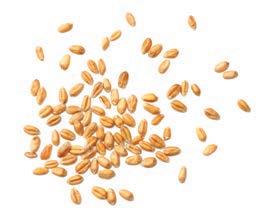
Q1. Differences between wheat and kidney bean roots/venation? 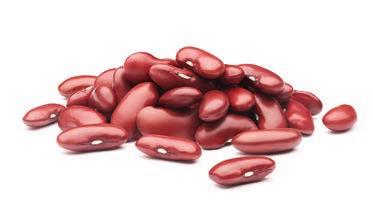
Answer:
Wheat is a monocot — fibrous roots and parallel leaf venation. Kidney bean is a dicot — taproot system and reticulate leaf venation.
Q2. Group animals by habitat (Venn diagram): Dolphin, Whale, Horse, Sheep, Squirrel, Pigeon, Frog, Crocodile, Earthworm, Tortoise.
Answer:
- A (Aquatic): Dolphin, Whale
- B (Terrestrial): Horse, Sheep, Squirrel, Pigeon
- C (Both/Amphibious): Frog, Crocodile, Earthworm, Tortoise
(Note: Crocodile, earthworm, and tortoise live in both water and land/moist soil to varying degrees, so they are commonly placed in the overlapping region; frog is the clearest amphibian.)
Q3. Radish root type and leaf venation?
Answer:
Radish has a taproot (the radish we eat is itself a swollen taproot). Its leaves show reticulate venation (radish is a dicot).
Q4. Mountain goat vs plains goat — similarities/differences and reasons.
Answer:
Similarities: Both have four legs, horns, eat grass, similar body shape.
Differences: The mountain goat has thick, shaggy white fur, while the plains goat has short, smooth fur.
Reason: These are adaptations — thick fur helps the mountain goat survive cold mountain temperatures, while the plains goat doesn't need heavy fur in warmer conditions.
Q5. Group animals (cow, cockroach, pigeon, bat, tortoise, whale, fish, grasshopper, lizard) by a new feature.
Answer:
Grouping by number of legs:
- Two legs: Pigeon
- Four legs: Cow, tortoise, lizard
- Six legs: Cockroach, grasshopper
- No legs (fins/flippers): Whale, fish
- Wings for flight: Bat, pigeon
(Any valid feature such as 'lays eggs vs gives birth to young,' or 'lives on land vs water' is acceptable.)
Q6. Effect of deforestation and how to address it.
Answer:
Effects: Cutting forests destroys the habitat of plants and animals, causing loss of food, shelter, and water sources — leading to loss of biodiversity, species decline/extinction, soil erosion, and disturbed rainfall patterns.
Solutions: Afforestation/tree plantation, protecting forests and wildlife sanctuaries, reducing deforestation for construction, using resources sustainably, and raising awareness.
Q7. Flowchart — examples of A and B (A: has leaves, reticulate venation = Yes; B: reticulate venation = No).
Answer:
- A (has leaves, reticulate venation = Yes): Example — Hibiscus, Mango, Chickpea (dicots)
- B (reticulate venation = No, i.e., parallel venation): Example — Grass, Wheat, Banana (monocots)
Q8. Questions Sanjay can ask Raj about 'Gudhal is a shrub'.
Answer:
- Is its stem hard or soft?
- Does it branch close to the ground?
- Is the stem thick like a tree or thin?
- How tall does the plant grow?
(Hibiscus actually has features between shrub and small tree depending on variety — the point of the question is to prompt clarification using the height/stem criteria learned in the chapter.)
Q9. Table completion — examples for each group (A: Dicot, Taproot; B: Monocot, Fibrous roots).
Answer:
| Group | Type of seed | Type of root | Examples |
|---|---|---|---|
| A | Dicot | Taproot | Mango, chickpea, hibiscus, mustard |
| B | Monocot | Fibrous roots | Wheat, maize, grass, lemongrass |
(a) Plants of Group A also share reticulate venation in their leaves.
(b) Plants of Group B also share parallel venation in their leaves.
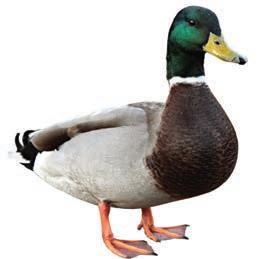
Q10. Duck's webbed feet vs pigeon's feet. 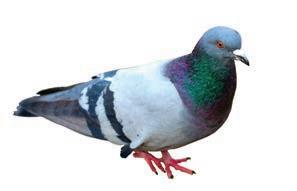
Answer:
The duck has webbed feet (skin connecting the toes), while the pigeon has separate, clawed toes without webbing. The webbed feet act like paddles, helping the duck swim efficiently in water, whereas the pigeon's feet are suited for walking and perching on branches.